Agri-Logistics Consolidation Across the Nile Basin
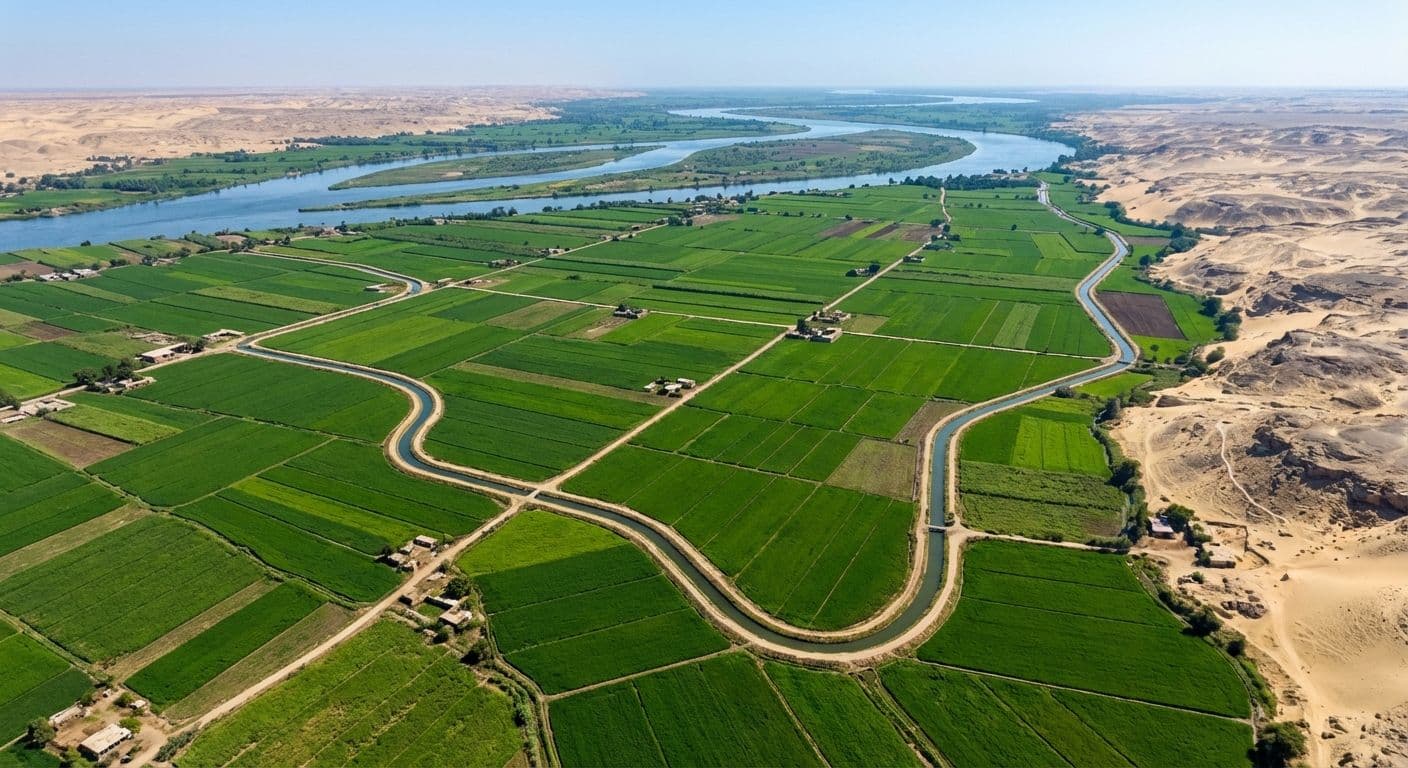
Supply chain fragmentation across Nile Basin agriculture creates one of the most compelling consolidation opportunities in emerging market infrastructure. From Egypt’s Delta to Uganda’s highlands, disconnected smallholder aggregation, cold-chain gaps, and absent last-mile distribution are collectively destroying an estimated 30–35% of perishable crop value annually.
The Consolidation Opportunity
Platforms that integrate the full value chain — from farm-gate aggregation to export gateway — can capture 10–18% of incremental crop value that is currently being lost to spoilage, intermediary extraction, and logistics inefficiency. The addressable market across 6 Nile Basin countries exceeds $4.2 billion in annual perishable crop throughput.
Market Fragmentation Drivers
- Smallholder dominance — over 80% of agricultural output originates from farms under 2 hectares, making aggregation economically critical for any platform model.
- Cold-chain infrastructure gap — Sub-Saharan Africa has 1 refrigerated warehouse per 26,000 metric tonnes of perishable output, versus 1 per 6,000 in comparable middle-income economies.
- Export gateway congestion — Mombasa and Port Said handle 68% of regional agricultural exports through aging facilities, creating bottlenecks that premium platforms can bypass with bonded warehouse capacity.
- Digital traceability deficit — EU and GCC import standards increasingly mandate lot-level traceability. Platforms offering farm-to-port digital certification can command 15–25% price premiums in premium export channels.
“The Nile Basin is not a frontier agriculture market — it is a developed production base with a frontier logistics stack. The returns are in fixing the stack.”
— Madad Agriculture Research, 2025
Platform Strategy
The most defensible platform architecture combines asset-light aggregation networks (digital farmer relationships, mobile money payment rails) with asset-heavy cold-chain nodes at key transit points. This hybrid model achieves the scale economics of aggregation while maintaining the asset-level returns that make infrastructure-backed equity viable.
Key Metrics to Watch
- Farmer registration rate — platforms crossing 50,000 active farmer relationships per cold-chain node achieve break-even utilisation
- Export channel mix — a 30%+ premium export share (EU/GCC-certified) is necessary for unit economics to sustain cold-chain capex
- Post-harvest loss rate — a platform-level target of sub-12% loss rate (versus sector average of 30–35%) is the primary value-creation lever
To learn about Madad’s current agriculture pipeline, explore next investments.