Real Estate Demand Drivers in High-Growth Urban Corridors
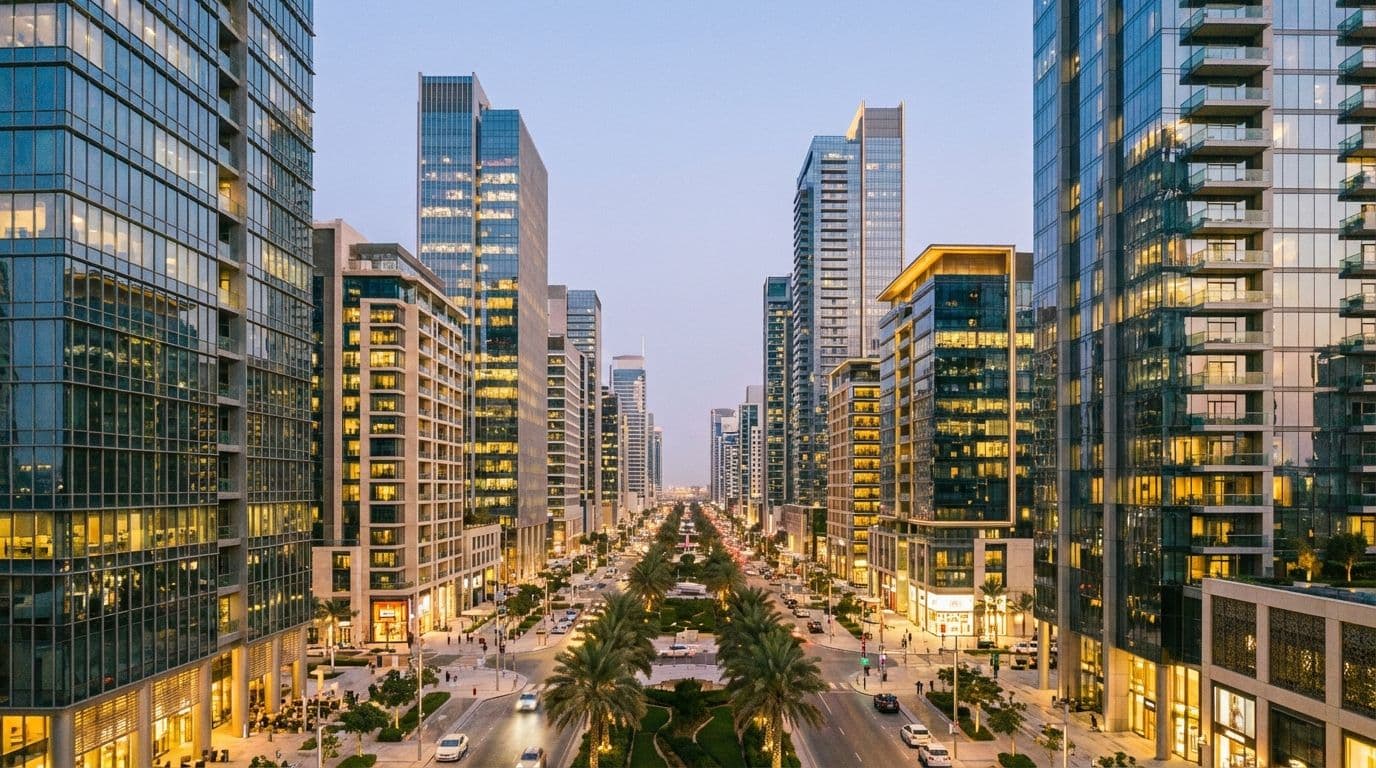
Urbanisation rates in our target markets continue to outpace housing supply at a structural level. This is not a cyclical phenomenon — it is the consequence of demographic momentum, internal migration, and a generational underinvestment in mixed-use development that created the conditions for a decade of capital deployment opportunity.
Demand Fundamentals
Across Egypt, Morocco, Jordan, and Senegal, urban population growth is running at 3.2–4.8% annually — more than double the global urban average. Household formation is outpacing permitted residential completions by 2.3 units for every 1 unit delivered in secondary corridors where land is still affordable for mixed-use development.
Target Market Indicators
- Price-to-income compression — residential affordability ratios in target corridors remain 30–40% below Gulf benchmarks, creating structural upside as formal employment grows.
- Retail occupancy premiums — ground-floor retail in mixed-use corridors commands 15–22% NOI premiums over single-use residential on equivalent land parcels.
- Mortgage market depth — mortgage penetration in Egypt and Morocco is below 5% of GDP, but growing at 18–22% annually — a structural multiplier for residential price appreciation.
- Government land release programmes — Egypt’s New Administrative Capital and Morocco’s New Urban Centres programme are releasing subsidised land to qualified developers, reducing equity requirements at entry.
“The best real estate returns in the next decade will not come from prime urban cores — they will come from the corridors connecting those cores to where people are actually moving.”
— Madad Real Estate Research, Q4 2025
Mixed-Use Corridor Thesis
Our investment thesis centres on master-planned mixed-use corridors within 25–45km of established urban cores. These corridors offer 5–8x land cost advantages over equivalent in-city parcels while benefiting from expanding transit and utility infrastructure. The first-mover advantage in corridor land banking is a 3–5 year window before institutional competition closes the gap.
Risk Factors
- Currency devaluation risk in Egypt and sub-Saharan markets — mitigated through hard-currency off-plan sales to diaspora buyers and GCC investors
- Planning and permitting delays — addressed by acquiring land with existing masterplan approval and partnering with government-backed development authorities
- Construction cost inflation — managed through fixed-price EPC contracts and local materials sourcing strategies that reduce import dependency
For current real estate pipeline opportunities, explore Madad’s next investments.